This company selling AI name tags is worth $350M
 by Jason Lee
Welcome to Breadcrumb, where we bring you stories on how regular people build profitable apps with AI.
📖 Today's story
- WHO
- Ross Finman
- WHAT
- A wearable AI badge that tracks what's on store shelves
- FOUNDED
- 2023
- VALUATION
- $350M
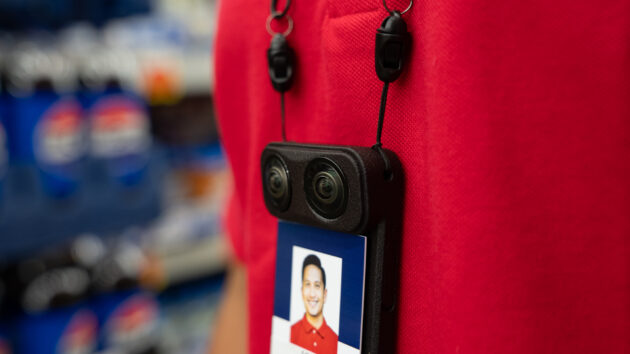
Augmodo makes a small badge with two tiny cameras on it and they’re now worth $350M.
Here’s how it works.
A grocery store worker clips it on and just does their normal job. Walks the aisles, stocks shelves, helps customers.
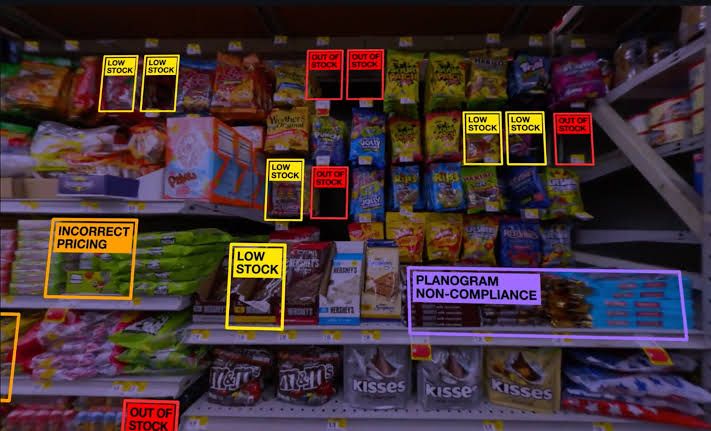
During that time, the badge watches the shelves. The AI camera builds a live map of the store. It sees what's sold out, what's running low, what's priced wrong, and what got put back in the wrong spot.
It’s a simple idea, but here's why it matters.
Stores lose a huge amount of money because they don't actually know what's on their own shelves. An empty shelf is loss of revenue, and it happens all day, in every store.
Other companies have tried to fix this. They put cameras in the ceiling or send little robots down the aisles at night. It's expensive and slow to set up.
Augmodo fixed all that with a simple AI camera badge. The badge installs in about 20 minutes. It costs roughly 100 times less than the robots. And because employees walks around the store all day, it checks the shelves about 10 times more often than a robot doing one lap after closing.
Better information, way less money, and nobody has to change how they work.
You can see it in the numbers. One of their customers is Chemist Warehouse, a big pharmacy chain in Australia. In the first month, their stores had 30% fewer empty-shelf gaps. They liked it enough to sign an $18 million deal and start rolling it out to 550 stores.
Now here's the part I actually find interesting.
It's not the $350 million valuation. It's which other busineses are interested in this tech?
Augmodo built it for grocery stores. But their store customers started using it in other places too. Warehouses, factories, hospitals. They’re all lining up for this to be implemented.

Yes, I know this isn't a pure software idea. There's a physical aspect to it here - the camera badge. Most founders won't touch anything physical. They'd rather just make another AI app.
So there’s less competition, just because it's a little harder.
And if you're reading this from outside the U.S., you've got an even bigger opening. A lot of what works here hasn't reached your country yet. You can take a proven idea like this, build your local version, and walk into a market with almost nobody else in it.
The tools are cheap now. A basic camera, a vision model, and a simple dashboard that tells someone what's missing.
So if you're okay dealing with a bit of hardware, you're already ahead of most people.
💡 Key takeaways
The physical world is the moat. Anything with hardware scares most builders off, so there's more room to breathe over there.
Outside the U.S.? Even better. Take an idea that already works here and bring it home, where the market is wide open.
I hope you enjoyed today's issue.
See you next week,
Jason Lee
Want ideas like this every Tuesday?





🥖 Fresh Crumbs
Anthropic extended Fable 5 access again, moving the cutoff from July 12 to July 19 and keeping the 50% Claude Code limit boost as OpenAI's GPT-5.6 arrives.
OpenAI released GPT-5.6 Sol, scoring 80 versus Fable 5's 77.2 on the Artificial Analysis Coding Agent Index while using less than half the output tokens and time.
Vercel added zero-config deployments for Lovable apps, so every Lovable change can sync through GitHub and automatically trigger a new Vercel deployment.
Apple took OpenAI to federal court, accusing the company and two former Apple employees of stealing trade secrets to build new AI hardware.
GitHub added AI prompt injection detection to CodeQL, flagging when untrusted user input reaches system prompts in JavaScript and TypeScript apps.